We live in contradictory times. We’re simultaneously more connected and more isolated
than ever before. How do artists respond to this paradox?
The metamodern approach embraces this contradiction rather than resolving it.
Artists like David Foster Wallace predicted this cultural moment – where irony
and sincerity oscillate like a pendulum, creating new forms of authentic expression.
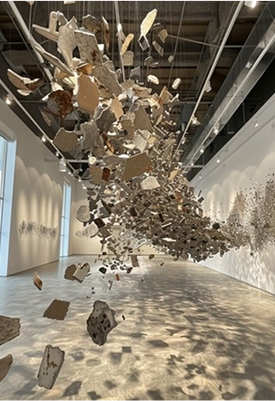
I see this in contemporary art everywhere: installations that are both playful
and profound, paintings that reference art history while critiquing it,
performances that celebrate and mourn simultaneously.
Take Banksy’s work – it’s deeply political yet commercially successful,
anonymous yet instantly recognizable, anti-establishment yet embraced by institutions.
This isn’t hypocrisy; it’s metamodernism in action.
As artists, we can no longer pretend to be above culture or outside systems of power.
Instead, we work within them while maintaining critical distance.
We create beauty while acknowledging ugliness, express hope while recognizing despair.
This oscillation isn’t weakness – it’s a sophisticated response to complexity.
Art that embraces contradiction might be our most honest form of cultural expression.